
This article was published on January 20, 2025
These bots don't need an instruction manual
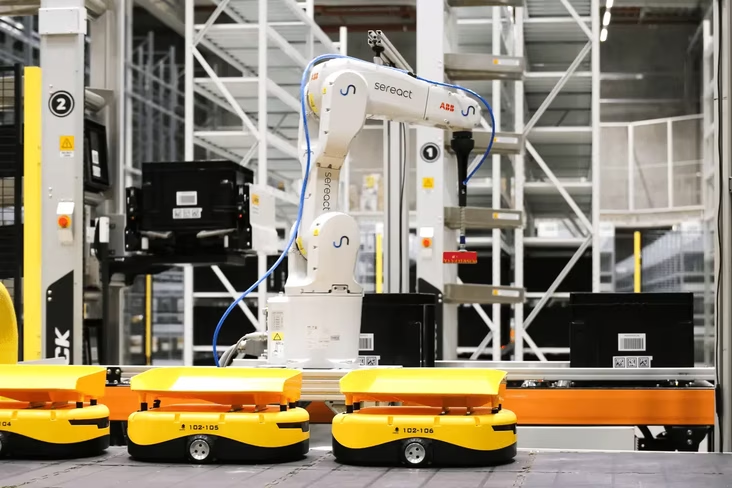
Stuttgart, Germany-based Sereact has secured €25mn to advance its embodied AI software that enables robots to carry out tasks they were never trained to do.
“With our technology, robots act situationally rather than following rigidly programmed sequences. They adapt to dynamic tasks in real-time, enabling an unprecedented level of autonomy,” said Ralf Gulde, CEO and co-founder of Sereact (short for “sense, reason, act”).
Early Spotify and Klarna-backer Creandum led the Series A round. Existing investors Point Nine and Air Street Capital also chipped in as did several prominent angel investors. These include former Formula 1 World Champion Nico Rosberg, ex-DeepMind product lead Mehdi Ghissassi, and past Skype exec Ott Kaukver.
Typically, robots — like those Roomba vacuum cleaners — are hard-coded. This means they follow exact instructions that enable them to repeat specific tasks.
The latest rumblings from the EU tech scene, a story from our wise ol' founder Boris, and some questionable AI art. It's free, every week, in your inbox. Sign up now!
Sereact’s e embodied AI, however, acts like a robot’s brain, allowing them to analyse and even learn new jobs on the go. This is thanks to a machine learning technique called zero-shot visual reasoning, which allows AI to understand and interpret images without prior specific training on those types of images.
The model, dubbed PickGPT, makes robots smarter. It also means humans don’t have to pre-program them for each task, saving time for the companies that use them.
“The opportunities here are endless and it’s great to see this kind of innovation coming from Europe,” said Johan Brenner, general partner at Creandum.
Sereact’s approach is similar to that of UK startup Wayve, which raised $1bn in Europe’s largest-ever AI funding round last year. However, while Wayve’s tech targets autonomous vehicles, Sereact focuses on logistics and warehouse robots that do things like pick and pack, sort goods, and run quality control checks.
Firms like BMW, Daimler Truck, Bol and Active Ants have already adopted Sereact’s software at their factories. However, the startup is now looking to venture beyond the warehouse.
Sereact said it will use the fresh funding to develop new “robot hardware platforms,” such as mobile robots and humanoids. The company also plans to expand its US presence.
“We’re on an exciting journey to become the leading platform for robotics applications that forever change the daily lives of people and businesses,” said Gulde.
Siôn is a freelance science and technology reporter, specialising in climate and energy. From nuclear fusion breakthroughs to electric vehic (show all) Siôn is a freelance science and technology reporter, specialising in climate and energy. From nuclear fusion breakthroughs to electric vehicles, he's happiest sourcing a scoop, investigating the impact of emerging technologies, and even putting them to the test. He has five years of journalism experience and holds a dual degree in media and environmental science from the University of Cape Town, South Africa. When he's not writing, you can probably find Siôn out hiking, surfing, playing the drums or catering to his moderate caffeine addiction. You can contact him at: sion.geschwindt [at] protonmail [dot] com