
This article was published on August 10, 2023
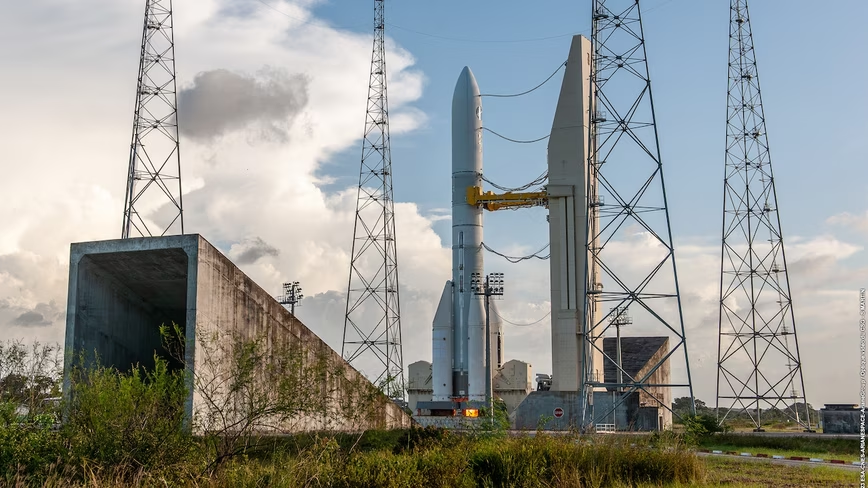
The European Space Agency’s next-generation heavy-lift rocket, Ariane 6, definitely won’t launch until at least 2024, the agency’s director general confirmed this week.
Ariane 6 was first scheduled to launch four years ago. However, the rocket has suffered a series of delays , attributed to technical issues, COVID-19, and design changes.
The ESA said the most recent setback was because it failed to complete a short hot firing test,, mimicking the environment in space to provide data to operators,of Ariane’s engine system in a July attempt. The ESA wants to reattempt the test on August 29, with tentative plans for a long hot fire test on September 26, at the agency’s spaceport in French Guiana .
With Ariane 5 officially decommissioned and Italy’s Vega C rocket grounded following launch failure in December, Europe is now without independent access to space satellites. Until Ariane 6 gets up and running, the EU will be forced to contract the work to Elon Musk’s SpaceX — the company’s Falcon rocket is the only viable alternative for hauling large satellites into orbit.
The latest rumblings from the EU tech scene, a story from our wise ol' founder Boris, and some questionable AI art. It's free, every week, in your inbox. Sign up now!
Exactly when Ariane 6 will embark on its maiden voyage is uncertain. A press briefing with the Ariane 6 Launcher Task Force is scheduled for September 4 to provide an update on the launcher, ESA announced on Tuesday.
Arianespace CEO Stéphane Israël tweeted a timeline on Tuesday laying out the next steps for Ariane 6 testing ahead of an inaugural flight in 2024.
[1/5] Here below please find the updated schedule for #Ariane6 development. With this, @ESA , @ArianeGroup , @Arianespace and @CNES confirm that the inaugural launch is now targeted for 2024.
— Stéphane Israël (@arianespaceceo) August 8, 2023
Despite its setbacks, Ariane 6 has a number of institutional launches to carry out, and it has been attracting commercial contracts, including 18 launches for Amazon’s Kuiper broadband megaconstellation project.
Siôn is a freelance science and technology reporter, specialising in climate and energy. From nuclear fusion breakthroughs to electric vehic (show all) Siôn is a freelance science and technology reporter, specialising in climate and energy. From nuclear fusion breakthroughs to electric vehicles, he's happiest sourcing a scoop, investigating the impact of emerging technologies, and even putting them to the test. He has five years of journalism experience and holds a dual degree in media and environmental science from the University of Cape Town, South Africa. When he's not writing, you can probably find Siôn out hiking, surfing, playing the drums or catering to his moderate caffeine addiction. You can contact him at: sion.geschwindt [at] protonmail [dot] com