
This article was published on June 24, 2025
The Exploration Company's mission was deemed "part success, part failure"
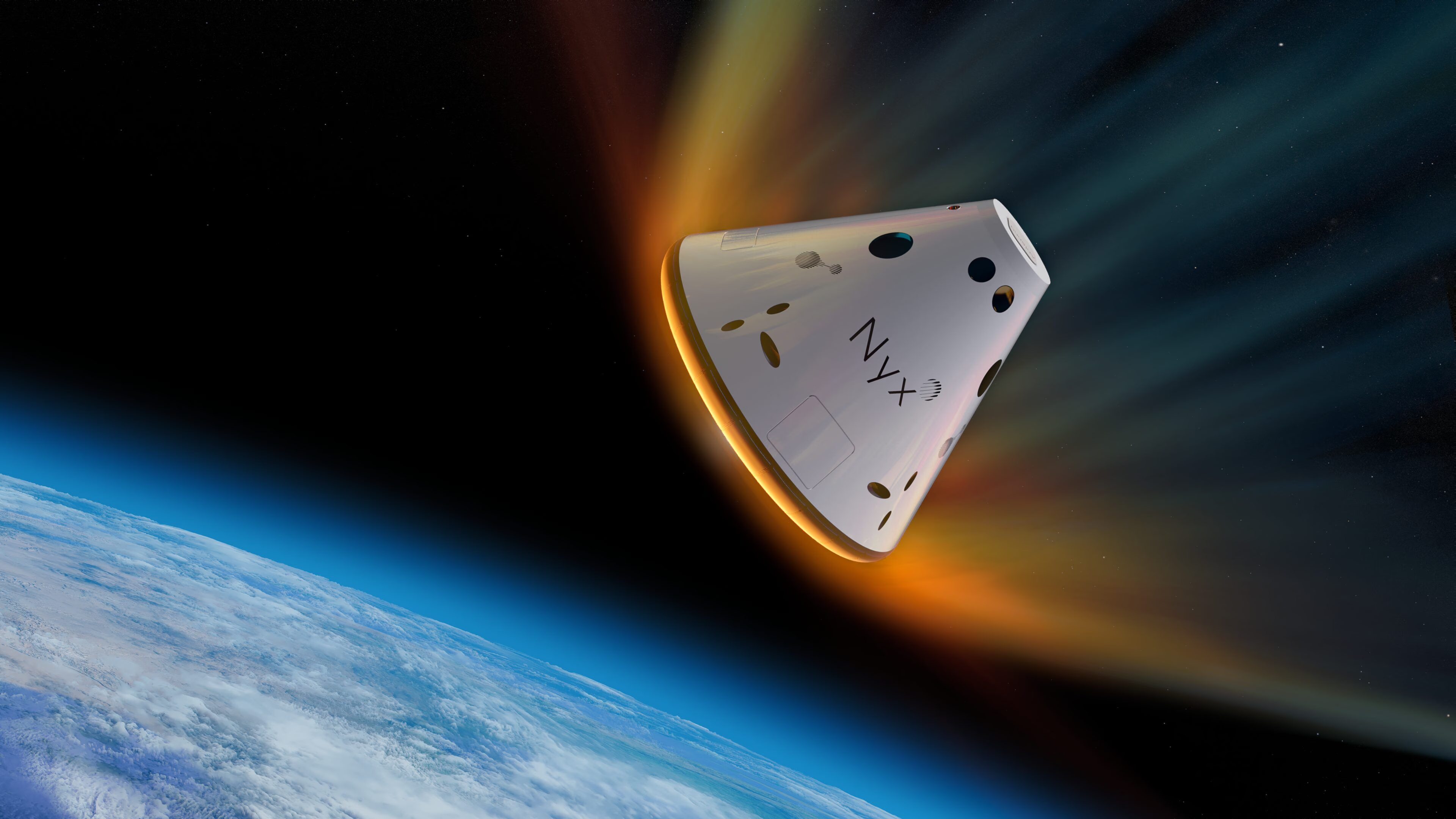
Communication with a privately funded European space capsule was lost Tuesday shortly after the spacecraft reentered Earth’s atmosphere.
The capsule launched on a SpaceX rocket from Vandenberg Space Force Base in California on Monday. The Exploration Company, which built the spacecraft, described the mission as a “partial success” and a “partial failure.”
“The capsule was launched successfully, powered the payloads nominally in orbit, stabilised itself after separation with the launcher, re-entered and re-established communication after blackout,” the Munich-based startup said in a LinkedIn post today.
“But it encountered an issue afterwards, based on our current best knowledge, and we lost communication a few minutes before splash down,” it added.
This communication loss suggests a possible malfunction or anomaly, though the company says it is still investigating the root cause. It’s also not yet clear whether the spacecraft was damaged or lost entirely. The Exploration Company did not immediately reply to our request for comment.
The launch — dubbed Mission Possible — marked the second test flight for The Exploration Company. The company’s inaugural mission, Mission Bikini , was a smaller-scale reentry demonstrator launched aboard the maiden flight of Ariane 6 in July 2024. However, a malfunction in the rocket’s upper stage prevented the capsule from executing its planned reentry manoeuvre, leaving it stranded in orbit.
Mission Possible carried 300 kilograms of commercial cargo, including payloads for cosmetic and pharmaceutical research. It also hosted cremated remains and DNA samples from customers around the globe.
“ We apologise to all our clients who entrusted us with their payloads,” the company said.
We’ll update this article once we have more information on the status of Mission Possible.
Siôn is a freelance science and technology reporter, specialising in climate and energy. From nuclear fusion breakthroughs to electric vehic (show all) Siôn is a freelance science and technology reporter, specialising in climate and energy. From nuclear fusion breakthroughs to electric vehicles, he's happiest sourcing a scoop, investigating the impact of emerging technologies, and even putting them to the test. He has five years of journalism experience and holds a dual degree in media and environmental science from the University of Cape Town, South Africa. When he's not writing, you can probably find Siôn out hiking, surfing, playing the drums or catering to his moderate caffeine addiction. You can contact him at: sion.geschwindt [at] protonmail [dot] com