
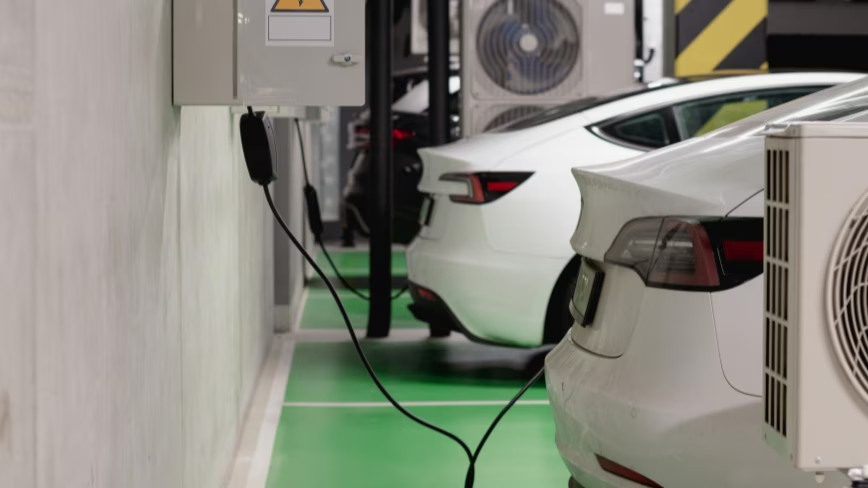
Germany registered 84,057 EVs in June, a 78% year-on-year jump. Tesla Model Y led the segment. EVs now have 28.4% market share, just ahead of hybrids at 28.1%.
EVs outsold every other fuel type in Germany for the first time in June. 84,057 registrations, up 78% YoY. Tesla Model Y led with 6,023 units. EVs hold 28.4% market share.
Electric cars outsold every other fuel type in Germany for the first time in June. The country’s Federal Motor Transport Authority recorded 84,057 new EV registrations, a 78.2% year-on-year increase, putting battery-electric vehicles at 28.4% market share. Traditional hybrids came second with 83,315 registrations (28.1%), followed by petrol at 60,796 (20.5%), diesel at 33,862 (11.4%), and plug-in hybrids at 32,212 (10.9%).
The Tesla Model Y led the EV segment with 6,023 registrations, enough for third place in overall standings across all fuel types. The Volkswagen ID.3 took second among EVs with 3,514, followed by the Skoda Enyaq at 3,383. Total German new car registrations reached 296,378 in June, up 15.7% year-on-year. Volkswagen dominated overall with 51,058 registrations, followed by BMW and Skoda. Chinese automakers are entering Western markets at speed , but in Germany the top-selling EVs are still European and American brands.
The milestone matters because Germany is Europe’s largest car market and the birthplace of the internal combustion engine. It is the country of the Autobahn, of diesel-powered long-distance cruising, and of Volkswagen, BMW, and Mercedes-Benz, companies that built their reputations on petrol and diesel engineering. For EVs to take the top spot there, even by the narrowest margin over hybrids, signals that the transition has reached the symbolic centre of European car culture.
The latest rumblings from the EU tech scene, a story from our wise ol' founder Boris, and some questionable AI art. It's free, every week, in your inbox. Sign up now!
The context tempers the celebration. Out of 61 million vehicles registered in Germany, only 4.1% are EVs. The vast majority, 59.3%, still run on petrol. Rising memory and component costs are squeezing budgets across consumer electronics , and the same battery-related cost pressures are slowing EV affordability gains. June’s result shows that Germans are choosing electric when they buy new, but the fleet will take years to turn over. The page in the history books has been written. The chapter will take much longer.
Technology enthusiast and intern at The Next Web, contributing to research-backed content and investigating new technologies and global even (show all) Technology enthusiast and intern at The Next Web, contributing to research-backed content and investigating new technologies and global events. Interested in business and how the narrative and perception of technology is shaped.