
This article was published on January 12, 2024
It's like if binoculars, a camera, and a wildlife guide had a baby
As a kid, perhaps unsurprisingly, I was the only person I knew interested in birdwatching. Nevertheless, I regularly went out in nature armed with my binoculars, bird book, and camera, ready to document as many species as I could.
The process was largely manual — spot a bird through the binoculars, snap a pic (if it stood still for long enough), and then try to figure out what species it was, if I didn’t already know. But the times they are a changin’.
Austrian optical specialist Swarovski Optik has just unveiled the world’s first pair of smart binoculars. Powered by AI , the binos can identify 9,000 species of birds and other wildlife for you.
Here’s how they work. When you find a bird in your field of vision, you press a button, and a red circle surrounds the object as the binoculars process the image. Within about five seconds, the name of the animal pops up on the screen. Most birds move fast though, so I’m skeptical that five seconds is quick enough.
The latest rumblings from the EU tech scene, a story from our wise ol' founder Boris, and some questionable AI art. It's free, every week, in your inbox. Sign up now!
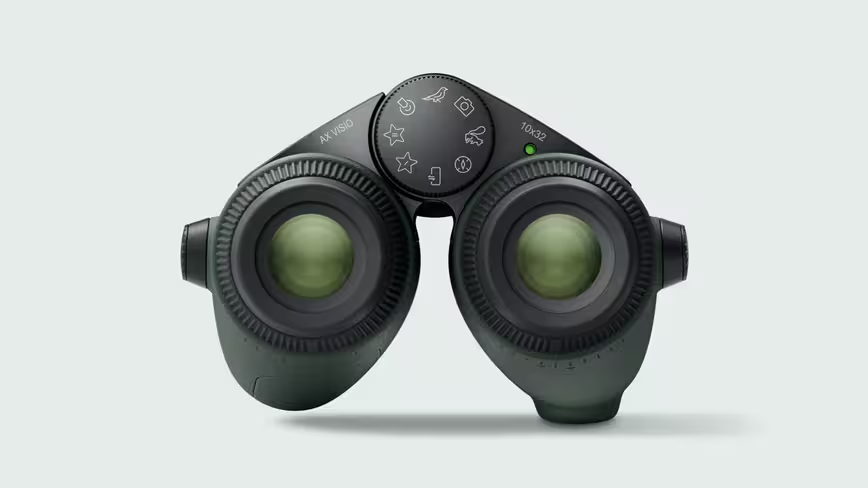
D ubbed AX Visio, they are powered by an integrated operating and object-recognition system and an onboard neural processing unit. They also feature an inbuilt camera that can snap high-res images and upload them directly to your smartphone via the Swarovski Optik Outdoor app . Pretty cool right?
The AX Visio have an integrated GPS to help the onboard processor know the type of species you might be looking at based on your location. They also come with a “shared discoveries” function that allows you to guide fellow twitchers to the bird you’re looking at using arrow markers in the display.
The binos were designed by world-famous industrial designer Marc Newson. In 2015, his Lockheed Lounge chair sold at auction for £2.4mn ( €2.8mn) , making it the most expensive object ever sold by a living designer. Let’s just say, Mr Newson knows a thing or two about design and that shines through with the AX Visio.
The design is minimalistic, gracefully hiding the tech o n the inside. The forest green barrels with a black aluminum bridge and black eyecups give a sleek look that is sure to appeal to outdoorsy types. I think it’s quite astounding that they’ve managed to fit all those gadgets into a shell that is the same size as a typical pair of binoculars.
Back in my birding days, if you had told me that in the future there would be a pair of binoculars that could identify species for you and snap pics of them at the same time I’d think you were having a laugh. But this is the world we’re living in now.
However, one thing that might kill the fun, or even make you cry, is the price t ag. The AX Visio starts at €4,600 .
They do come with a rechargeable battery, eyepiece cover, USB charging cable, and a strap, though. And the software gets regular updates much like you’re smartphone. Not to mention they’ll identify the wildlife for you.
Despite the price, the AX Visio is undoubtedly a very cool piece of tech, and I’m interested to see whether this will be a once off fad or if it will open up a new market.
One thing I’m afraid of thought is that automating birding might take some of the fun out of it. The challenge of scrolling through a paperback book (yes, those still exist) and trying to figure out what bird you saw is all part of what makes this hobby so addictive.
Siôn is a freelance science and technology reporter, specialising in climate and energy. From nuclear fusion breakthroughs to electric vehic (show all) Siôn is a freelance science and technology reporter, specialising in climate and energy. From nuclear fusion breakthroughs to electric vehicles, he's happiest sourcing a scoop, investigating the impact of emerging technologies, and even putting them to the test. He has five years of journalism experience and holds a dual degree in media and environmental science from the University of Cape Town, South Africa. When he's not writing, you can probably find Siôn out hiking, surfing, playing the drums or catering to his moderate caffeine addiction. You can contact him at: sion.geschwindt [at] protonmail [dot] com